
Airport Industrial High Security Gates
FAA-Compliant Vertical Pivot Gates Built for Stringent Security Demands
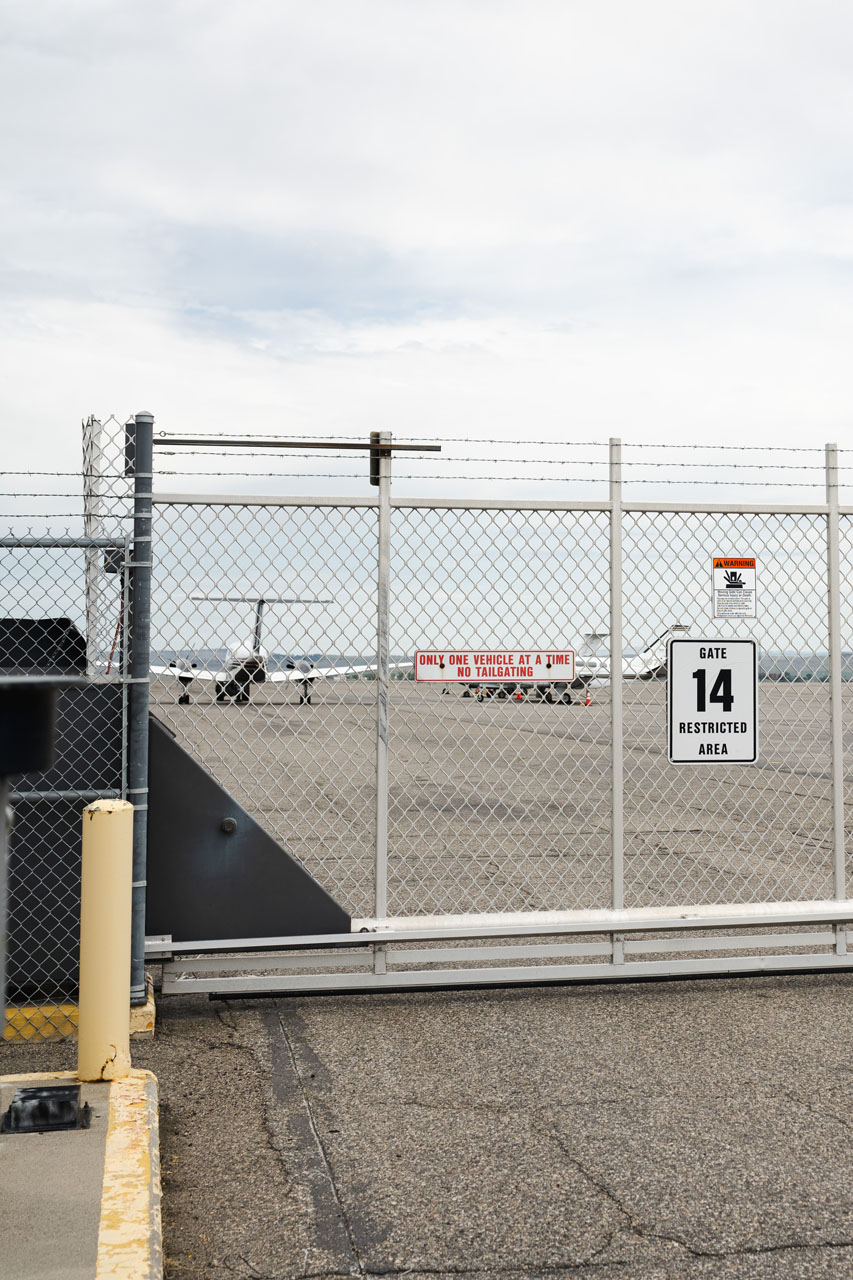
When you need to maintain strict airport perimeter protection while allowing authorized vehicles through secure checkpoints, Tilt-A-Way vertical pivot gates have you covered. Our gates support high-security access control, FAA compliance needs, and reliable operation for airfield service roads and airport infrastructure.
Airfield access + vehicle checkpoints: controlled vehicle entry for airport operations
FAA-compliant, UL325-listed, built for commercial-grade cycles
5–11 ft heights available for perimeter fencing with barbed wire
Airports can’t afford a weak link in perimeter security.
Between vehicle checkpoints, airfield service roads, and high-exposure environments near open runways, an airport security gate must deliver controlled access, high reliability, and compliance alignment.
Which Gate Type is Best for Airport Perimeters?
Airport perimeters demand gates that open fast, stand up to constant use, and hold up in wind, snow, and exposed conditions, all while meeting FAA and UL325 requirements. Vertical pivot gates are built for exactly that.
Clearance + vehicle access fit
Perimeter exposure (wind-prone areas)
Best Fit
Vertical Pivot
Strong fit for service vehicle access points
Designed for exposed environments
High-security airport access points needing reliability + clearance
Swing
Can work, but clearance/swing radius can be limitin
Can be impacted by clearance and wind conditions
Open areas with fewer constraints
Slide
Can work, but requires long run space
Depends on site conditions and run space
Sites with ample run space and moderate operational complexity
Key Features of an Airport Perimeter Security Gate
We offer the option to customize your gate with a range of features and specifications to meet your specific needs. Our team of skilled engineers and designers will work to create a gate that not only provides the highest level of functionality, but also enhances the aesthetic appeal of your property.
Controlled vehicle access
Supports vehicle checkpoints and restricted entry workflows
FAA compliance support
Built for compliance-driven airport requirements
High reliability operation
Consistent performance for airport operations and access points
10–11 ft height capability
Configuration options that match common airport perimeter needs
Wind-ready perimeter performance
Suited for exposed runway-adjacent environments
UL325 safety listing support
Credibility for spec and procurement requiremen
Where Airport Operators Use Tilt-A-Way Gates
Vertical pivot gates can be used for:
Airfield access gates for service vehicles and maintenance crews
Vehicle checkpoints at controlled perimeter entry points
Gates for airport service roads and restricted access routes
Perimeter entry locations where space, clearance, and reliability matter
Secure access to operations areas and critical airport infrastructure zones
Configure Your Airport Perimeter Gate
Every airport is different. Tilt-A-Way gates are engineered to match the technical ratings and operational needs of your facility.
We’ll configure your gate around:
Checkpoint workflow (guard post, controlled entry lanes, authorized vehicle access)
Vehicle types + clearance (service trucks, maintenance fleets, emergency access needs)
Gate height + opening requirements (including 10–11 ft options where needed)
Perimeter exposure (wind, weather, runway-adjacent conditions)
Compliance + spec needs (FAA-driven requirements and documentation)
Trusted by Major Airports



Frequently Asked Questions
Can these gates support airfield access and airport service road entry points?
Yes. Tilt-A-Way vertical pivot gates are installed at commercial airports including Denver International, Cleveland Hopkins, and Bozeman Yellowstone International. They’re built for controlled vehicle access at airfield service entrances, maintenance roads, fuel farms, and secured perimeter checkpoints. These are the high-cycle, high-reliability environments airport operations demand.
Are your gates compatible with vehicle checkpoints and access control systems?
Yes. Our gate operators integrate with standard access control systems, including keypads, card readers, RFID, loop detectors, and centralized security management software. Controlled entry for authorized vehicles, emergency response, and airport personnel is a standard configuration.
Do you support FAA compliance requirements for airport gate projects?
Yes. FAA compliance is a baseline requirement for any airfield perimeter installation, and we build every airport-spec gate to meet it. We work with airport engineers, general contractors, and fencing installers to ensure the gate meets applicable FAA security, clearance, and operational standards for your project.
Can the gate be configured for 10–11 ft height requirements?
Yes. Our vertical pivot gates are available in configurations up to 11 ft, which accommodates the 10 ft mesh plus 1 ft of barbed wire typical of airport perimeter fencing. This height capability is one reason airports like Cleveland Hopkins selected Tilt-A-Way when other gate types couldn’t meet the spec.
How do these gates perform in wind-prone runway environments?
The vertical pivot design has a narrow wind profile compared to slide and swing gates, making it well-suited to exposed perimeter and runway-adjacent locations. The operator is also engineered to handle snow, ice, and extreme cold. Tilt-A-Way gates are installed across a wide range of climates, from northern-tier airports to high-wind coastal regions.
Where are airport perimeter security gates typically installed?
Common installation points include main airfield service entrances, fuel and maintenance access roads, cargo area checkpoints, ground support equipment (GSE) gates, and secured perimeter vehicle access points. Any location where authorized vehicles need controlled entry to an airfield or airside area is a candidate for a vertical pivot gate.